
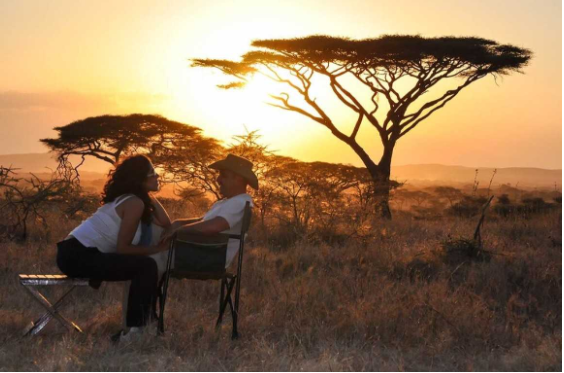

A Tanzania safari for two is one of the most rewarding ways to experience East Africa. Two travelers can move at their own pace, share a private vehicle, and enjoy the kind of intimacy that larger groups rarely get. Whether you’re a couple on a honeymoon, two friends on an adventure, or a parent and adult child making memories, a duo safari offers real flexibility. It also comes with its own pricing quirks, because some costs are fixed no matter how many people are in the vehicle. This guide explains how a safari for two works, what it costs, and how to plan it well.
Why Two Is a Great Number for Safari
Two travelers hit a practical sweet spot.
Flexibility. You decide when to start your game drive, how long to stay at a sighting, and whether to skip a stop. There’s no need to compromise with strangers.
Comfort in the vehicle. A standard safari vehicle seats six or more, so two guests have room to move between windows, stand through the pop-up roof, and set up cameras without competing for space.
Better guide attention. Your guide can tailor the experience to your interests, whether that’s big cats, birds, photography, or conservation.
Easier logistics. Two people are simple to place in lodges and tented camps, and many properties offer double or twin rooms as standard.
Privacy. For couples especially, a private vehicle and quiet camp setting create a more personal trip.
The trade-off is cost. A guide and vehicle cost the same whether two or six people ride in it, so each person in a duo carries a larger share.
How Much Does a Tanzania Safari for 2 People Cost?
Safari prices are usually quoted per person per day, which makes comparison easier. Published 2026 estimates give a broad spread of roughly $250 to $1,500 or more per person per day, depending on accommodation tier, season, and group size. Group size matters here, and two travelers typically pay more per person than a group of four or six sharing a vehicle. dumaexplorer
Here is a practical planning guide for two people sharing a private vehicle:
| Style | Approx. per person per day | 7-day total for two |
| Budget (camping or basic lodges) | $300–$450 | $4,200–$6,300 |
| Mid-range | $450–$700 | $6,300–$9,800 |
| Luxury | $700–$1,500+ | $9,800–$21,000+ |
These are estimates, and actual prices depend on the operator, season, and route. Excluded costs include international flights, visas, insurance, and tips. Ask for itemized written quotes.
Note that some sources cite lower budget figures for group departures, since vehicle costs are split among more people. If two of you join a shared group safari, the per-person cost can fall, though you lose the privacy and flexibility of a private vehicle.
Where the Money Goes
Understanding the structure helps you judge quotes.
Park fees. These are the biggest fixed cost, charged per person per 24 hours. Rates differ by park, and sources vary on exact figures, but premium parks such as the Serengeti and Ngorongoro generally fall around $70 to $85 or more per adult per day, while Tarangire and Lake Manyara cost less. For a typical week in the northern parks, government fees alone run roughly $500 to $600 per person. For two travelers, that is roughly $1,000 to $1,200 before you pay for accommodation or transport. dumaexplorer
Vehicle and guide. A guide-and-vehicle day rate is a fixed expense. One travel guide estimates about $300 per day as a flat rate that often excludes park fees. With only two people, each shares half. twowanderingsoles
Accommodation. Lodges and camps usually price per room or per person sharing a double. Single supplements apply to solo travelers, but two people sharing avoid them.
Extras. Visas, tips, and activities add to the total.
Private vs. Shared Safari for Two
This is the most important decision for a duo.
Private Safari
You get your own vehicle, guide, and itinerary.
Pros: full control over timing, privacy, ideal for photography, easier to adjust to weather or wildlife movement.
Cons: the highest per-person price, since vehicle and guide costs are shared between only two people.
Shared or Group Safari
You join other travelers in a vehicle, usually with a fixed schedule.
Pros: a lower per-person cost.
Cons: less flexibility, and compromise on timing and sightings. Check group size and confirm every guest gets a window seat.
For couples and honeymooners, private is usually worth the extra expense. For budget-minded friends, a small group departure can be a good compromise.
Best Itineraries for Two
Short Safari: 3 to 4 Days
Tarangire, Lake Manyara, and Ngorongoro make a compact route, ideal if time or budget is limited. You’ll see elephants, birdlife, and the crater’s dense wildlife without long drives.
Classic Safari: 5 to 7 Days
The northern circuit of Tarangire, Ngorongoro, and the Serengeti is the most popular choice. It balances variety with manageable travel times and works well in most months.
Extended Safari: 8 to 10 Days
Adding a second Serengeti region, or the southern parks of Nyerere or Ruaha, gives you more variety and fewer vehicles. Internal flights may be needed, which raises the cost but saves long drives.
Safari Plus Beach
Many couples end with three or four days in Zanzibar. It’s a restful finish after early starts and long game drives, and a popular honeymoon choice.
Accommodation Options for Two
Camping. The lowest-cost option. Two people share a tent, and a crew handles cooking and setup. It suits adventurous duos who don’t mind basic facilities.
Budget and mid-range lodges. Comfortable rooms with private bathrooms, meals included, and often a pool or viewing deck.
Permanent tented camps. Canvas suites with real beds and en-suite bathrooms, often in better locations. They offer a stronger bush atmosphere.
Luxury lodges and camps. Private decks, plunge pools, gourmet dining, and exclusive locations. Popular for honeymoons and anniversaries.
Ask whether rooms are a double bed or two singles, since this isn’t always guaranteed, and request your preference in writing.
Best Time to Go for Two Travelers
Timing depends on what you want to see.
- Late June to October: the best overall game viewing, with the highest prices and the most vehicles.
- January to March: calving season on the southern Serengeti plains, with strong predator action and softer pricing.
- November and December: short rains, green scenery, and quieter parks.
- April and May: the long rains, with the lowest prices but heavy weather and some camp closures.
If you’re after river crossings, aim for roughly July to October in the northern Serengeti. If you prefer fewer crowds and better value, consider the shoulder months. Premium-park fees are largely the same year-round, so seasonal savings come mainly from lodging and operator rates.
How to Save Money as a Pair
Even with fixed costs, two travelers have options.
- Travel in shoulder season for lower accommodation rates.
- Mix lodge types, such as camping on some nights and lodges on others.
- Choose lower-fee parks for part of the trip, like Tarangire and Lake Manyara.
- Stay longer in fewer places to cut transfer costs.
- Consider a small group departure if you can accept less flexibility.
- Book early for better availability and sometimes better rates.
- Skip optional extras, such as the balloon safari, which one operator prices at around USD 550 to 600 per person. cheetahsafaris
- Use a licensed local operator, and compare detailed written quotes.
Tips for Couples and Honeymooners
- Tell your operator the occasion. Many camps arrange small surprises, such as a bush dinner or a special setup.
- Request a double bed in advance and confirm it.
- Consider a mix of activities, such as a sunrise balloon flight or a walking safari where available.
- Pace yourselves. Early starts and long drives can be tiring, so build in lodge time to rest.
- Add a beach stay to unwind afterwards.
Practical Tips for Any Duo
- Pack layers. Mornings can be cold, especially from June to August, and afternoons warm.
- Bring binoculars so both of you can enjoy distant sightings, plus a camera with a good zoom.
- Agree on priorities before the trip, whether that’s big cats, photography, birds, or relaxation.
- Budget for tips. A common guideline is USD 10 to 20 per person per day for the guide, with smaller amounts for camp staff. cheetahsafaris
- Arrange health requirements early, including vaccinations, malaria prevention, and travel insurance with medical evacuation.
- Check visa rules for your nationalities. A tourist visa commonly costs around $50, but requirements vary.
Red Flags When Comparing Quotes
- A price that seems too low to cover park fees and a private vehicle
- Vague wording such as “park fees may apply” or “similar accommodation”
- No named guide or vehicle details
- Pressure for large deposits via untraceable payment methods
- No verifiable license, reviews, or track record
Park gates operate with digital payment, and cash is generally not accepted, so your operator should handle fees on your behalf.
Conclusion
A Tanzania safari for two combines flexibility, privacy, and personal attention, which is why it suits couples, friends, and family duos so well. The main trade-off is price, since fixed costs like park fees, the vehicle, and the guide are shared between only two people. Expect to spend roughly $300 to $700 per person per day for a private budget to mid-range trip, and more for luxury. To get the best value, choose your season and parks carefully, mix accommodation types, and compare detailed quotes from licensed operators. Plan around what matters most to the two of you, and you’ll have a trip that feels tailor-made.
Fees, taxes, and rates change, and published figures vary between sources. Confirm current prices and inclusions with your operator and the official park authorities before you book.
Key Takeaways
- A private safari for two typically costs roughly $300 to $700+ per person per day, depending on style and season.
- Fixed costs such as park fees, the vehicle, and the guide are shared between only two people, so per-person prices are higher than for larger groups.
- Private safaris offer flexibility and privacy, while small group departures cut costs.
- The northern circuit is the most popular route, and Zanzibar is a favorite add-on for couples.
- Shoulder season lowers lodge rates, while premium-park fees remain mostly steady.
- Confirm bed types, inclusions, and named accommodation in writing.
- Choose a licensed operator and be wary of unusually low quotes.
Frequently Asked Questions
- How much does a Tanzania safari for 2 people cost?
A private seven-day trip typically costs roughly $4,200 to $6,300 for two at the budget level, $6,300 to $9,800 at mid-range, and $9,800 or more for luxury. These are estimates, so always request itemized quotes. - Is a private safari worth it for two people?
For most couples, yes. A private vehicle gives you flexibility, privacy, and a tailored pace. If budget is tight, a small group departure can lower costs. - How many days do two people need for a safari?
Five to seven days suits most first-time visitors on the northern circuit. Shorter trips of three or four days are possible, and longer trips allow a slower pace or an extra region. - When is the best time for a couple to visit?
Late June to October offers the best overall game viewing, while January to March is excellent for calving season and quieter conditions. November and December offer good value. - Can we combine a safari with a beach holiday?
Yes. Zanzibar is the most popular choice, with a range of resorts and flight connections from several safari areas. - Are park fees included in the package?
Usually, but confirm in writing. Ask whether concession, vehicle, and crater fees are covered. - Will we get a double bed?
Often, but not always. Request your preference when booking and confirm it in writing for each property. - How can two people reduce safari costs?
Travel in shoulder season, mix camping and lodges, choose some lower-fee parks, stay longer in fewer places, and compare quotes from licensed local operators. - How much should we tip?
A common guideline is $10 to $20 per person per day for your guide, plus smaller tips for the cook and camp staff. - How far ahead should we book?
For peak season, book six to twelve months ahead, especially for popular camps. For quieter periods, three to six months is often enough.
I can also put this in a file, or adapt the tone, audience, or target operator if you’d like.