
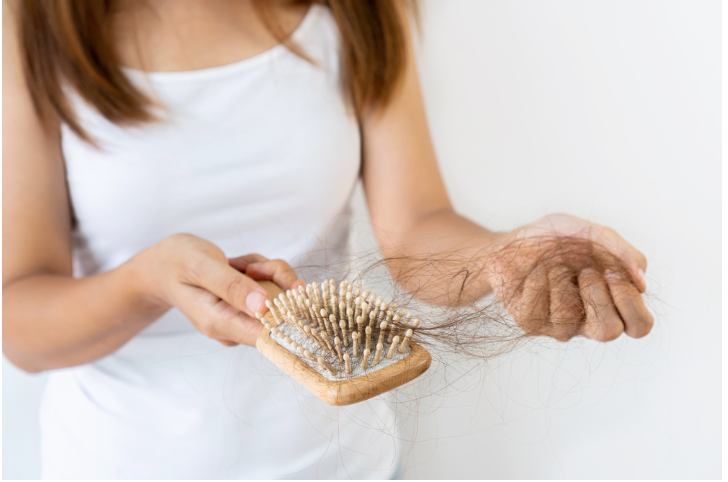

You might not expect a medical clinic specializing in treating chronic pain to offer platelet-rich plasma (PRP) injections for hair loss. But many pain medicine clinics do, including Lone Star Pain Medicine in Weatherford, Texas. PRP is included in their list of treatments, but it’s not just for osteoarthritis pain and sports injuries. It is also a treatment for alopecia.
Unfortunately, hair loss affects millions of people across the country. A loss of hair can impact a person’s self-confidence and daily well-being. Traditional remedies include topical chemical treatments and surgical transplants. Meanwhile, PRP is an alternative regenerative procedure.
Regenerative medicine is designed to trigger the body’s natural healing responses. That is exactly what PRP therapy does. It triggers your body to naturally activate follicles and regrow hair.
The Basics: What Is PRP Therapy?
PRP is essentially an autologous orthobiologic treatment. It utilizes biological material you provide – your own blood, specifically. That blood consists of plasma, red and white blood cells, platelets, and growth factors. Platelets and growth factors are both involved in tissue repair and vascular regeneration.
Without getting too technical, blood is drawn and processed in a specialized centrifuge to isolate the platelets and growth factors. The resulting material has a significantly higher ratio of active growth factors compared to freshly drawn blood. Here’s the bonus: the material that comes out of the centrifuge does not have the inflammatory red blood cells that can cause so much discomfort.
The material is injected into the scalp at various locations. Almost immediately, its platelets and growth factors signal the body to get to work. Over time, multiple injections have shown the ability to regrow hair naturally.
How It Actually Works
So how does PRP therapy actually regrow hair? It’s all about stimulating what the body is supposed to do by itself but doesn’t. Once injected, the concentrated PRP material stimulates increased micro-circulation around hair follicles. Doctors refer to this as angiogenesis. The result is a surge of blood flow that delivers essential nutrients.
The process also reactivates inactive follicles and extends the active growth phase of the hair cycle. It can even slow down future shedding. Of course, results vary between patients. No hair loss treatment is 100% effective. When PRP injections do successfully regrow hair, they do so very well.
PRP Therapy Is Safe and Convenient
In past years, there have been news reports detailing how doctors have used PRP injections inappropriately, thereby harming their patients. As a result, people wonder if PRP therapy is safe. Lone Star Pain Medicine stresses that it is.
As long as doctors are fully trained and follow existing FDA guidelines, PRP injections are minimally invasive and completely safe. The treatment utilizes blood you donate, so you get the following benefits:
- Very Few Risks – PRP injections are virtually risk-free. Because you are supplying the blood, there is almost no risk of an allergic reaction or biological rejection.
- Minimal Side Effects – The risk of side effects is also minimal. Some patients experience mild pain or tenderness at the site of the injections. Other than that, there is nothing to worry about.
PRP therapy is offered as an outpatient procedure performed right in your doctor’s office. A typical appointment takes an hour or less and requires no general anesthesia. Most patients leave the clinic immediately after treatment to return to daily activities.
If you are dealing with hair loss that has shattered your self-confidence and inhibited your ability to live the way you want to, consider PRP therapy. It is a treatment more Americans are looking into as an alternative to drugs and invasive surgeries.