

Securing project approvals remains one of the most important stages in any development process, especially within the industries of architecture, construction, and real estate. Success with any proposition largely relates to how well a vision is communicated-whether to clients, investors, regulatory boards, or any community stakeholder.
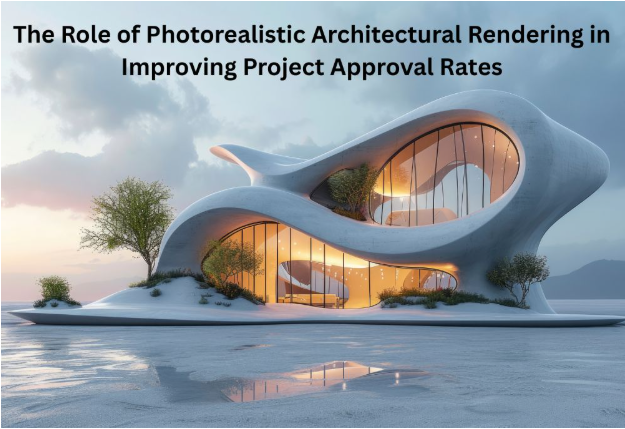
Herein enters photorealistic architectural rendering as a game-changer. These renderings take ideas of designs and turn them into life-like visuals, thus helping the stakeholders understand the scale, aesthetics, materials, and overall project impact in ways unmatched.
With continuous development, 3D photorealistic rendering has started to take over the roles of drawings and blueprints in approval presentations. Such complex architectural ideas are incomparably easier to understand by decision-makers, immersing themselves in these visualizations.
This reduces uncertainty and increases confidence in project viability. The effect of all this is that once high-quality renderings become part of the proposal package, higher overall approval rates result.
The following is a more detailed explanation of how photorealistic visualization improves the chances of project approval and streamlines communication at various stages of development.
1. Communicating Design Intent With Exceptional Clarity
One of the biggest barriers to approval: Most stakeholders cannot visualize a set of technical drawings. For a non-expert, it is most challenging to perceive a floor plan and elevations along with any other form of CAD in three dimensions.
Photorealistic architectural rendering solves this by showing the project the way it would appear in real life. With proper lighting, realistic materials, lifelike textures, and contextual surroundings, stakeholders easily understand:
- Overall design style
- Proportions and spatial relations
- Building massing
- Colour schemes and material selection
- Visual impact on the surrounding environment
Decisions regarding approval by decision makers are quicker and far better when the design intent is understood clearly.
2. Building Emotional Connection & Stakeholder Confidence
Humans respond visually, but more so to visuals that can simulate real environments. Allowing the viewer actually to walk through and feel a space before it’s even built, 3D photorealistic rendering creates that much-needed emotional attachment. This will make all the difference in inspiring passion and commitment to clients, investors, and community members alike.
Realistic visualization enables stakeholders to:
- Imagine themselves using or interacting with the space.
- See the value and attraction of the final development.
- Understand lifestyle, functionality, or market potential.
- Approve funding and construction phases with increased confidence.
The more realistic the rendering, the easier it is for stakeholders to trust that the design will meet expectations.
3. Reduce Miscommunication, Eliminate Guesswork
By nature, communication of a design traditionally involves some element of subjectivity, and misunderstandings can result in delays or even loss of approval. Photorealistic architectural renderings show precisely what the project will look like, allowing no room for interpretation.
This clarity prevents issues like:
- Misaligned expectations
- Confusion over materials or finishes
- Misinterpretation of scale and proportion
- Disagreement on design changes
A proper visual reference early on in the process means that teams reduce potential conflict getting in the way of approval.
4. Supporting Regulatory and Community Review Processes
Many projects of commercial, mixed-use, or public development are either subject to regulatory approvals or community consultations. These groups are quite often concerned with the impacts on transportation patterns, neighborhood character, environmental impact, or skyline views.
Photorealistic architectural renderings fortify this review process through clear, contextual visuals that depict:
- How the project fits within existing surroundings
- Sightline impact and shadow studies
- Pedestrian and vehicle flow
- Scale in relation to other buildings around
- Exterior Lighting Simulations
These detailed visuals assist reviewers in understanding compliance and grasping the project benefits, which can ultimately translate into easier approval outcomes.
5. Demonstration of Feasibility to Investors and Financial Partners
On a development project, financial approval would be just as important as design approval. The investor and lender would need to know what return a project could make, its market appeal, and viability.
3D photorealistic rendering can support financial presentations by visually proving:
- Top design quality
- Market-ready aesthetics
- Demand-driven features
- Strong commercial appeal
It is when investors can actually see what a completed project would look like that they are most likely to commit funding and support.
6. Enhancing Marketing Output Prior to Construction Commencement
Pre-construction marketing will play a major role in winning early buyers, tenants, or commercial partners, who are usually influential to the approval bodies. Renderings give the marketing teams the opportunity to start campaigns way before completion.
Realistic visuals can help teams create:
- Brochures and Advertising
- Website and Social Media Previews
- Virtual Walkthroughs
- Sales center displays
Most projects are approved by approval boards when a strong market interest, along with public enthusiasm, is demonstrated.
7. Helping Teams Refine Designs before Submission
Photorealistic architectural renderings serve during the very early design phase to help architects and developers visualize areas that need improvement. Teams can get the details ironed out that might lead to setbacks in approvals by seeing the design fully in context.
Renderings allow teams to adjust:
- Material Combinations
- Color palettes
- Landscaping details
- Lighting effects
- Exterior Components
More polished and thoughtful proposals are likely to get accepted.
Final Thoughts
It should be noted that, in the modern world of continuous development and progress in the field of architecture and engineering, photorealistic rendering has taken the spotlight in order to enhance communication, clarity, and stakeholder confidence in a project. From technical designs to life-like visuals, the renderings are most certainly much more apt to be understood and appreciated by regulatory boards, investors, and communities alike. By enhancing the depth and realism of 3D photorealistic rendering, approval presentations become persuasive, emotionally compelling, and visually intuitive.
High-quality visualization is no longer optional in this highly competitive development landscape but has become a strategic differentiator that greatly raises the bar on project approval rates and greases the wheels from concept to construction.